
Why You Quit Before Success - and How to Keep Going

People quit all the time. Abandoned New Year's resolutions, forgotten gym memberships, and diets that barely last a week. But why?
Are people too weak? Are their goals too hard? And what exactly separates these people from the ones who succeed?
Obviously, the answer to the final question is too vague. People have different lives, all with different personalities and circumstances.
However, as subjective as it may seem, I believe that there’s an overlapping cause, a common theme as to why so many people never reach their goals:
They quit too soon!
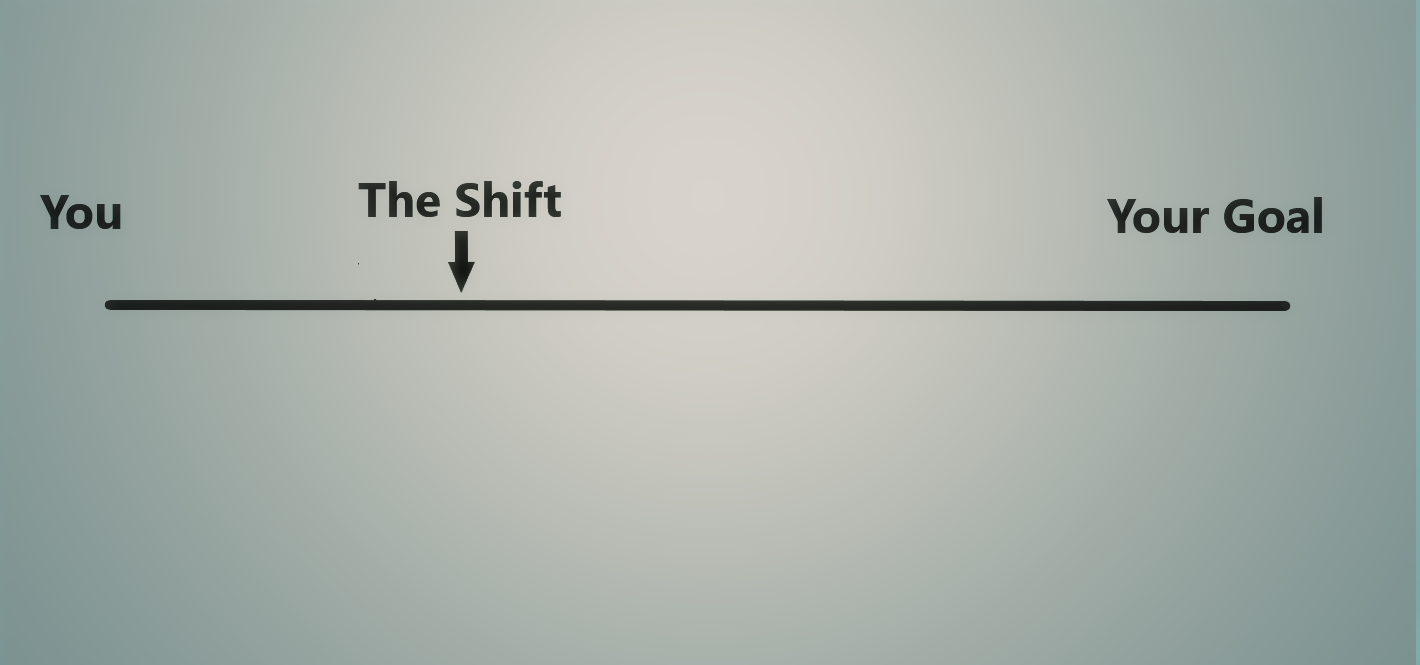
Not before success, although they do that too, but before a pivotal shift within themselves that not only propels them forward but completely changes the dynamic of their relationship with the very thing that holds them back: Discomfort.
Reaching this shift significantly increases the chances of going the distance, but what changes?
The Shift
When you set a goal, assuming it’s difficult to reach, then you’ve probably got a lot of discomfort ahead of you. But without good reason for that pain, all you get is suffering.
For example, you set the goal of running a half marathon. You lace up your shoes and set off for your first run, but what do you actually experience?
Well, your legs are tired, you’re out of breath, and it was one of the hardest things you’ve ever done, but that’s it…
The only slight exception might be a runner's high or a sense of achievement for ticking the first box. But besides that, it’s just pain. It’s discomfort without reward.
What's even worse is that it continues this way for longer than you’d expect. Whether it’s running, dieting or saving money. Initially, before delayed gratification kicks in, it’s just discomfort with no reward in sight.
Enjoy ideas like this? Join GrowthHub and receive 2 ideas a week on personal growth, psychology, and becoming a better version of yourself.
This might seem obvious, but I want you to truly think of what this must feel like for the person experiencing it. They could run 3 times a week for an entire month without really seeing any good reasons for doing so.
And so, they think to themselves, if this is what it’s like (especially after weeks of effort), what’s the point?
When they compare discomfort to comfort, and see no obvious reason to continue making the hard choice, then quitting becomes the obvious choice.
They logically understand that eventually it would start to work, but there’s a major difference between the theoretical and the actual experience of something. And it’s the latter that they desperately need.
So let’s play it out. When someone starts noticing that the effort they're putting into dieting is paying off, it’s a lot more than just gratification that this person will get.
Losing gives them more energy throughout the day, which makes them happier, they can now play with their kids, their confidence increases, that confidence leaks into other areas, and so on. Suddenly, their entire life improves.
Suddenly it goes from: Discomfort = ?, to Discomfort = Everything is better.
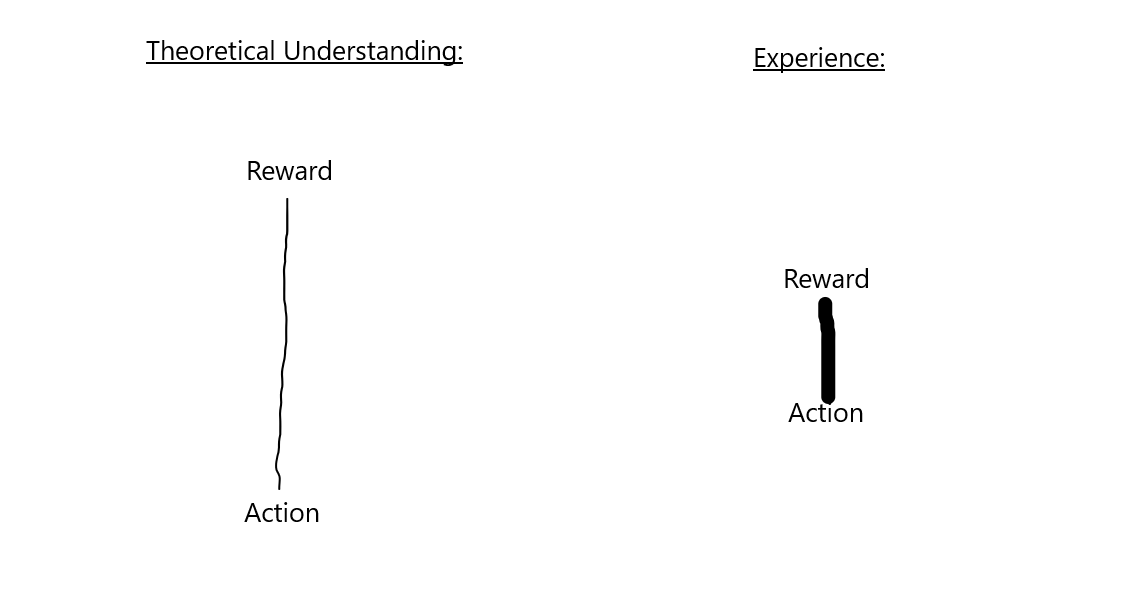
Not theoretically, but experientially. Your relationship with discomfort updates.
People say that the pain doesn’t go away, you just get stronger. Which, although true, still doesn’t explain the entire process.
The pain is the same, but your relationship with it changes, as you’ve now experienced what it brings.
You go from dreading your chicken salad, to loving it. The taste is the same, but the purpose of it aligns with something much bigger than taste.
To help visualise the internal change that happens each time you take the action, see below:
If you’re struggling to see how this shift can make a difference, just picture what might happen to someone after being in a car accident. They always knew what could happen (theoretically), but actually experiencing it now causes fear and anxiety when stepping into a car.
Their experience changed, and so their relationship with driving updates.
Although this is an extreme example, it clearly demonstrates how your experience can update your relationship with something, which is what we’re looking for with discomfort.
I guess, the only question that remains is: how do you reach this shift?
How to Get There
The truth is, reaching the point when you start falling in love with discomfort is the hardest part. You’re battling the most difficulty, without reward, before you’ve built enough discipline or momentum to help you get through.
That is why reaching it is heavily dependent on the person, but there are still some ways you can increase your chances of reaching it.
It’s no secret that when someone is coming from rock-bottom, the chances of them handling the difficulty of improving and changing are much higher, as the difficulty of change is better than the difficulty of hell.
I’m not suggesting you have to be or should seek rock-bottom, but I do think you should purposefully simulate its symptoms, so that the initial difficulty of change is viewed more appropriately.
An effective way of doing this is to take responsibility for why you're changing.
If you are losing weight, remind yourself of why. Do you get out of breath walking up the stairs? Are you pregnant and want a healthy birth/child? Do you want to increase your chances of living longer? Then remind yourself of that.
When things get tough, it’s easy to cover yourself in excuses and forget the reason why you set the goal in the first place, making quitting a lot easier. But when you stop and honestly bring to mind the reasons why you set out to change, especially when it’s for reasons such as the health of your child or an early death, the difficulty of eating your chicken salad suddenly shrinks.

It’s not beating yourself up about who you are, it’s refusing to be so weak that you’d rather shy away from reality than do something hard, it’s simply taking responsibility.
Another way to reach the shift is to adjust how you view time. When you’re struggling to see the point in making the hard choice, just think: time passes anyway, and you can either become the person you want to be, or stay the same.
The difference is within each of the decisions you make. Keep your promises, or break them.
If you’ve failed in the past, just ask yourself who or where you’d be today if you’d just bloody stuck with it! And refuse to make that mistake again.
When your relationship with difficulty goes from pain = end of equation. To pain = a better life, it goes beyond the actions that got you there, as you’re not just changing your relationship with dieting or running alone, you’re actually changing your relationship with difficulty and pain itself.
Meaning, if you were then to start your own business, study a course or do anything else that’s hard and takes time, you’ll have that same new relationship, increasing your chances of winning.
If there’s one thing I could drill into someone's mind when first beginning their journey, it’s that what they experience when they first start is not what they’ll continue to experience forever, and if they could just stick with it long enough, everything changes.
So if you're at the start, hang in there, it’ll be worth it.