
Personal Growth Isn’t Linear: The Psychology Behind Relapse


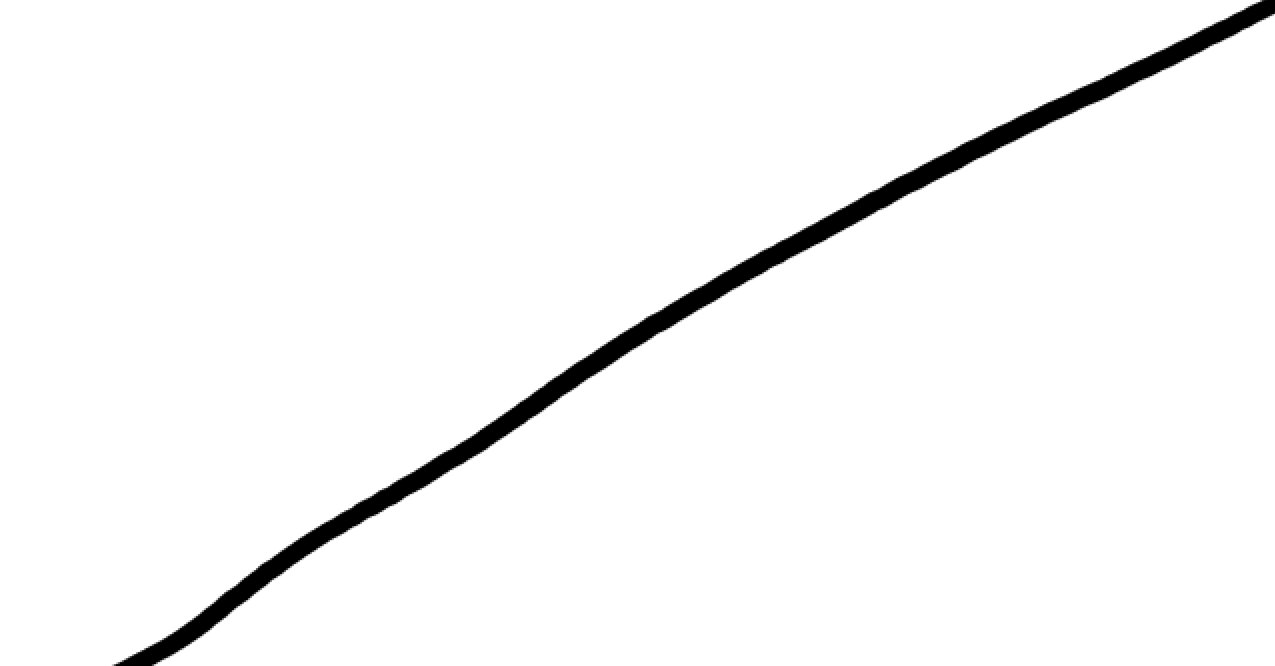
People often change very drastically, often very quickly, too. The problem is, it’s very common to view such growth as linear, a smooth, upward trajectory, going from sub-optimal all the way up to excellence.
This, however, is rarely the case. Growing and changing yourself is more often than not a very bumpy ride, with very unusual patterns and shifts of momentum along the way.
So instead of having a path that looks like this:
It’s often one that looks more like this:
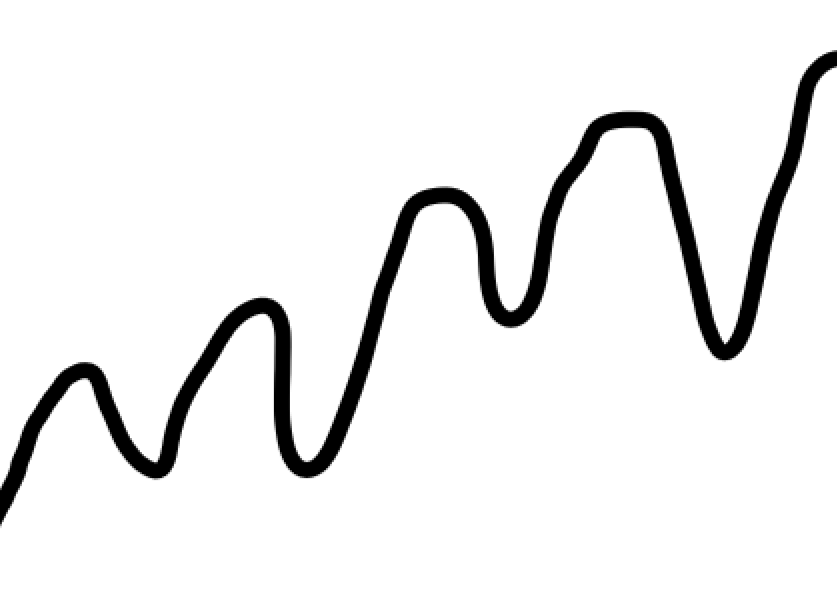
But let’s look at the latter, each spike is higher than the last, and let’s say this is over a 3-month period, if we were to extend that, to let’s say 3 years, it’ll likely end up still being a gradual incline.
Bear in mind, too, that the extent of these ups and downs will eventually even out. The longer you continue to grow, the steadier it becomes. So take that same 3-month experience and extend it to 3 years, it'll look something like this:

A lot of things can cause this, including external things completely out of our control, but the reason I’d like to focus on is the psychological reasoning behind it.
Psychological Homeostasis, Cognitive Patterns and More
When we go through dramatic experiences of sadness or stress, our brains try to regulate and bring that mood back to something resembling normality.
You may not realise when it’s happening, but this is why you may dip into the chocolate cupboard when you otherwise wouldn’t have, or why you decided to watch your comfort show again, or maybe run the bath.
Whatever helps you counteract the negative state your brain is in. This is called psychological homeostasis, in other words, a psychological home, because it’s where your brain likes to be.
Why am I talking about this? Well, because it also works the other way around.
When I first started to change and improve myself, and as I continued along that journey, there were many times when I’d experience a sort of relapse. As though I was slipping back to old ways.
This is psychological homeostasis at play, just in reverse order. I had become so used to the negative habits and thought patterns that when I started to leave them behind, my brain would almost drag me back to old ways. At least, that’s how it felt.
What was actually happening was that I had a psychological home, and during any form of struggle, the brain would react by once again returning to that home; it’s just unfortunate that my psychological home was a negative place to be.
When you go through this, it’s almost impossible to see the true reason behind it. It took me multiple times of slipping back to eventually see what was actually happening. Due to the subconscious element of psychological homeostasis, being aware of it in the moment is almost impossible.
WAIT! Are you trying to become the best version of yourself? Subscribe and receive a blog every Wednesday and an interesting insight every Saturday, straight to your email. Let's grow together!
There is a very strong cognitive reasoning behind this, too. Picture sledging in the deep snow, the more you sledge, the deeper the paths get until eventually you have a very defined path.
Creating a new path would be effortful, and if you were to go back down the mountain again, you’d follow the old path automatically, due to its depth. But eventually, with continued effort, the new path becomes deeper and more defined than the old, thus becoming the journey.

Well, your neuropathways, your brain's wiring, work the same way.
The longer you hold psychological patterns for, the stronger they get, so that when you start creating new ones, the brain can very easily slip into old ways. Although you’re going from negative patterns to positive ones, the brain only sees change and can deem it a threat, and is more susceptible to falling back into them during times of struggle and friction, which are plentiful and inevitable during change.
In my case, I was going from a solid decade and a half of negative and anxious thinking, and overcoming this requires completely altering the way the brain is wired.
This is why I so often ended up feeling the way I did before. The bigger the change, the more drastic and frequent the so-called “relapses” are.
In practical terms, it can look like the following:
- Being affected by every minor thing after months of handling stress extremely well.
- Questioning your abilities after a long period of high levels of self-belief and confidence.
- Struggling to get yourself up in the morning after improving your sleep patterns.
- Reacting negatively to things that haven’t bothered you in some time.
And many more.
Although I’m not yet aware of a way to mitigate or completely avoid this, I do believe simply being aware of it will help. As I said, it’s almost impossible to be aware of when going through it. Thoughts, emotions and behaviour are simply too complex and overwhelming in the moment to notice the pattern.
So, reading it through the lens and experience of someone else may offer a way to see through it. If I had read something that explained this during these times, it might have taken a load off my shoulders.
Instead of wondering whether I was too weak or trying to figure out why I keep regressing, I could have instead seen it as a sign of progress.
If slipping back into old ways happens due to improvement, then it actually is a sign of growth and not regression at all.
So if you’re currently going through a period like this, just remember that. And the more negative the starting point, the bumpier the road is going to be.